LOOT DROP: ULTIMATE BOARDGAME BACKPACK, PART 2, DM or Porter?

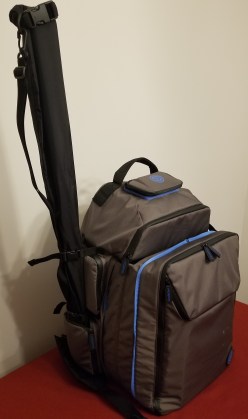
Here is how I pack the new backpack for DMing D&D 5E.

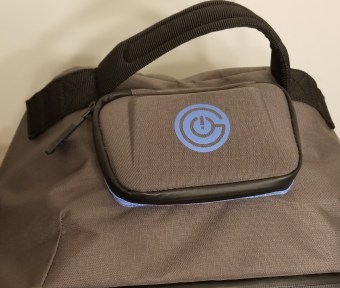
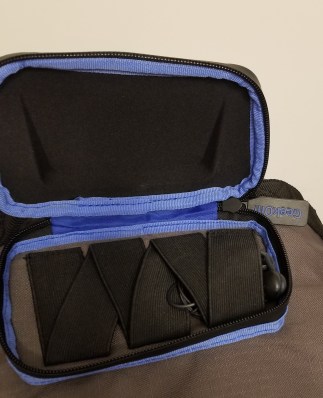
Starting at the top of the pack, there is a small compartment, meant for earbuds, chargers, etc.  I don’t really use it much.

earbud compartment earbud compartment open.jpg

Next is the large upper compartment of the pack.

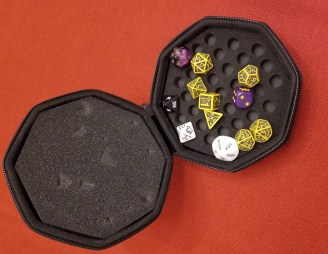
top compartment.jpgI keep the dice case in the dice tray, held in place with provided elastic straps.

dice case.jpgdice case and tray.jpg

dice case in straps.jpg

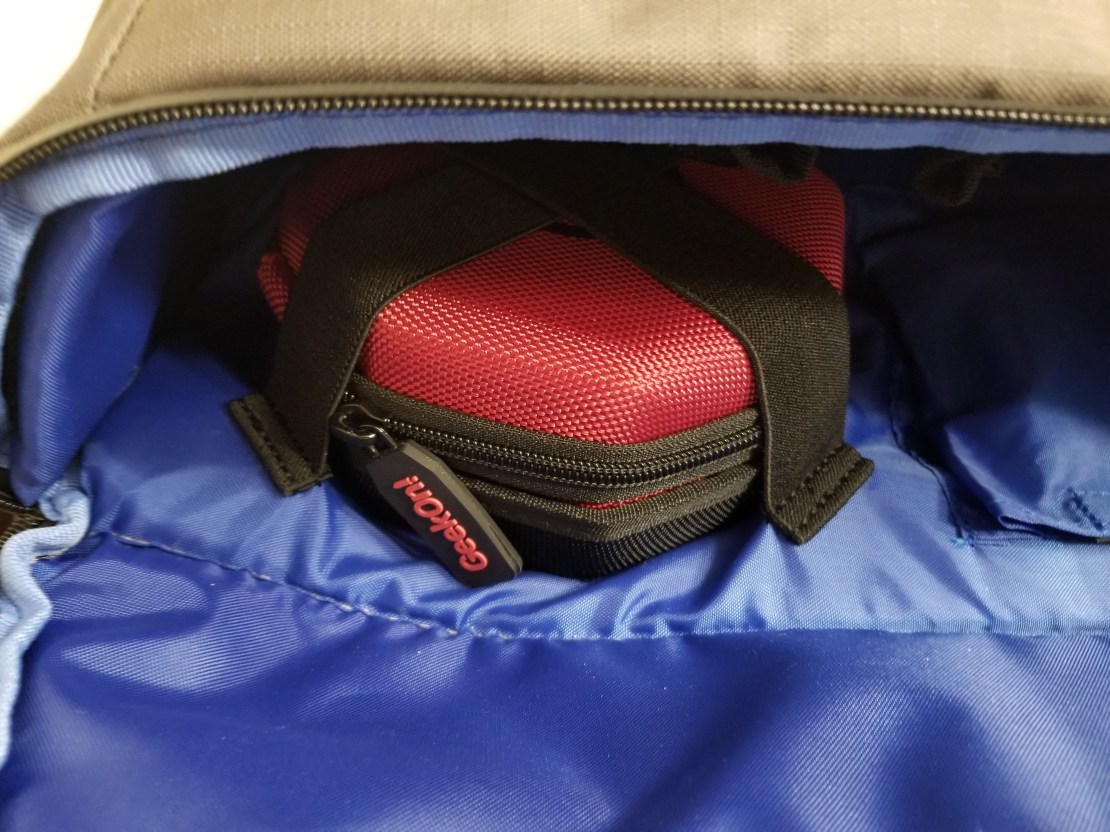
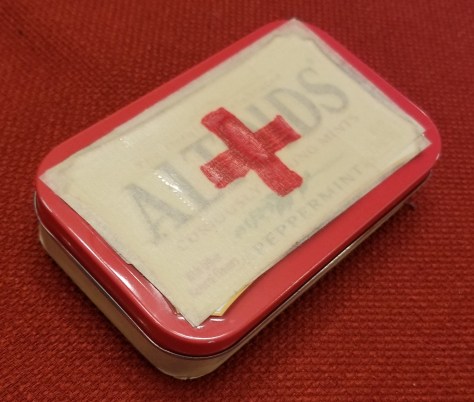
On the right in an internal pocket, I keep my “Healer’s Kit”

health dice in pocket.jpg

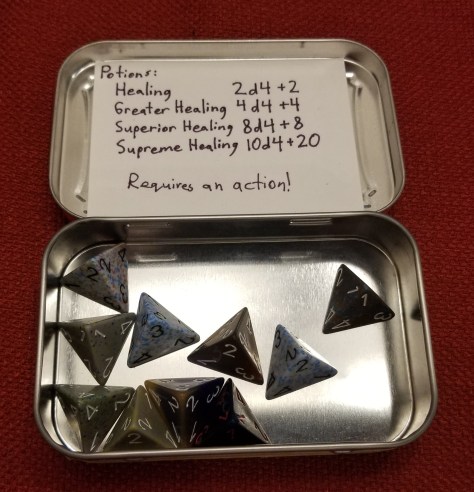
I kept getting annoyed trying to find how much healing each healing potion did, and finding sufficient d4s for it, so I made this kit.  On the inside of the lid it has the values for each healing potion category, and an important reminder:  It takes an action to quaff a potion!

health potion kit.jpg

health potion kit inside.jpg

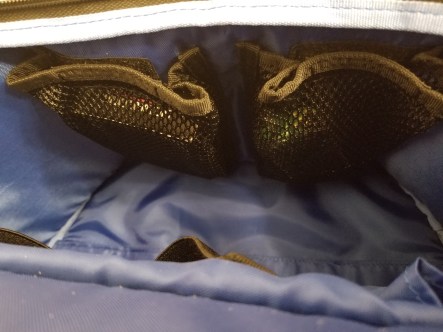
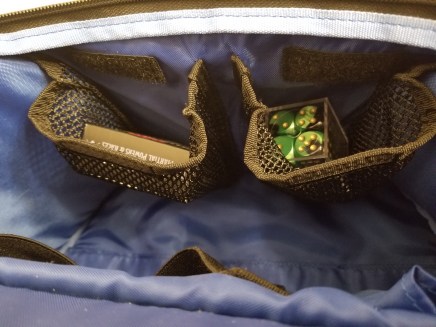
On top of the healer’s kit, and in the upper left mesh pouch, I keep some sets of spell cards.  In the upper right mesh pouch I keep a set of extra d6s, because it is the one die that uses multiples the most often.  Fireballs, anyone?  Green for green flame.

top compartment mesh pockets closed.jpg

top compartment mesh pockets.jpg

Moving out of the upper compartment in the side compartments I keep more sets of spell cards (for different types of characters.  In the bottom right compartment I keep a bottle of water for cleaning wet erase markers off of game mats.  I also strap my game mat to the side of the pack inside a dry bag.

right side of pack.jpg left side of pack.jpg

left side.jpg

In the pocket on the outside of the main compartment “door”, I keep my folders and character folios.

folders and folios 2.jpg

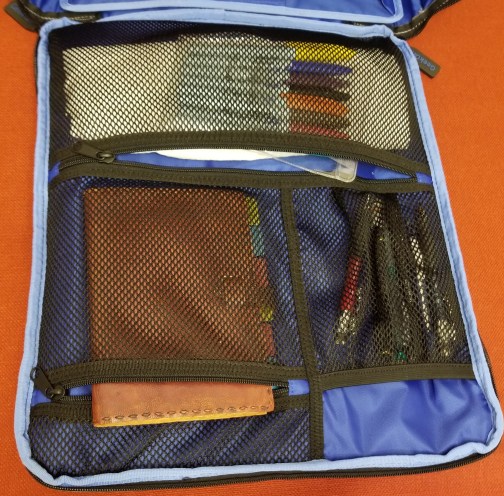
In the mesh pockets on the inside of the main compartment “door”, I keep the spellbook for my wizard (I made it before I really started collecting spell cards), wet erase markers, other writing utensils, a laser pointer, and some paper towels for cleaning the game mat.

mesh door.jpg

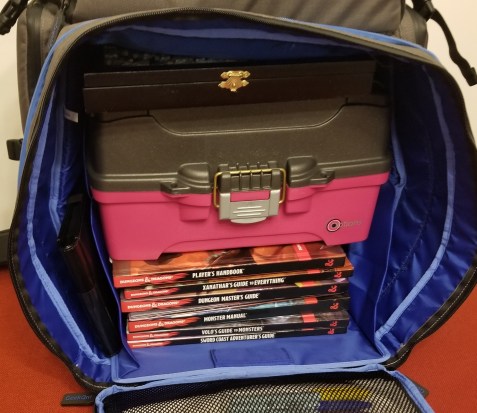
Now, for the main event, I have the main compartment fully expanded.

main compartment.jpg

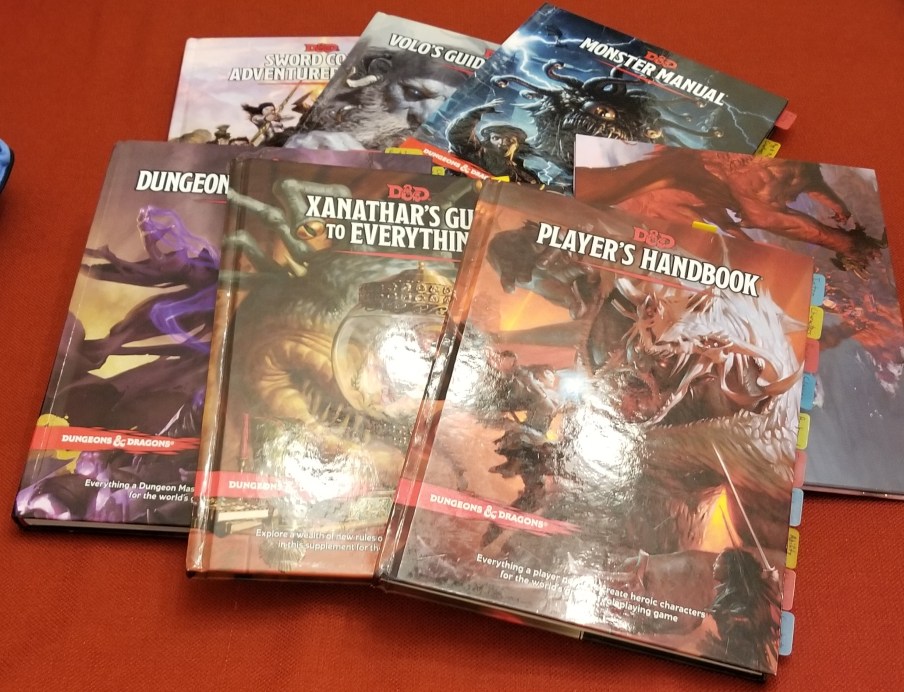
I keep a lot of rulebooks with me, the core 3 + Xanathar’s Guide + whatever hardcover I’m running are the main ones I keep with me.  I use the Dungeon Master’s Screen (Reincarnated version), with a few notes that I’ve attached to it.

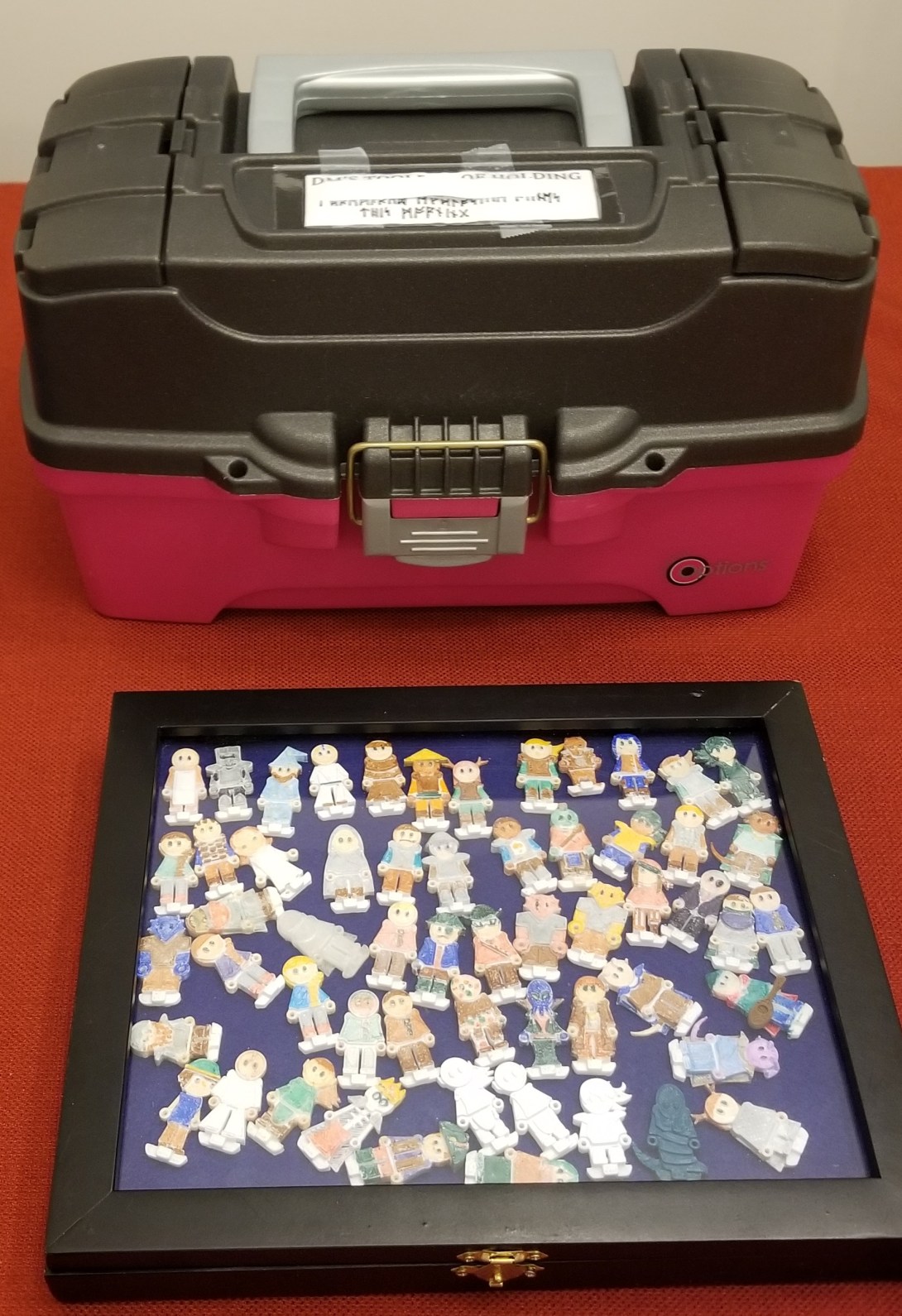
rulebooks and screen.jpgI also keep the toolbox and flatminis case in there for minis and tokens.

flatminis and toolbox.jpg

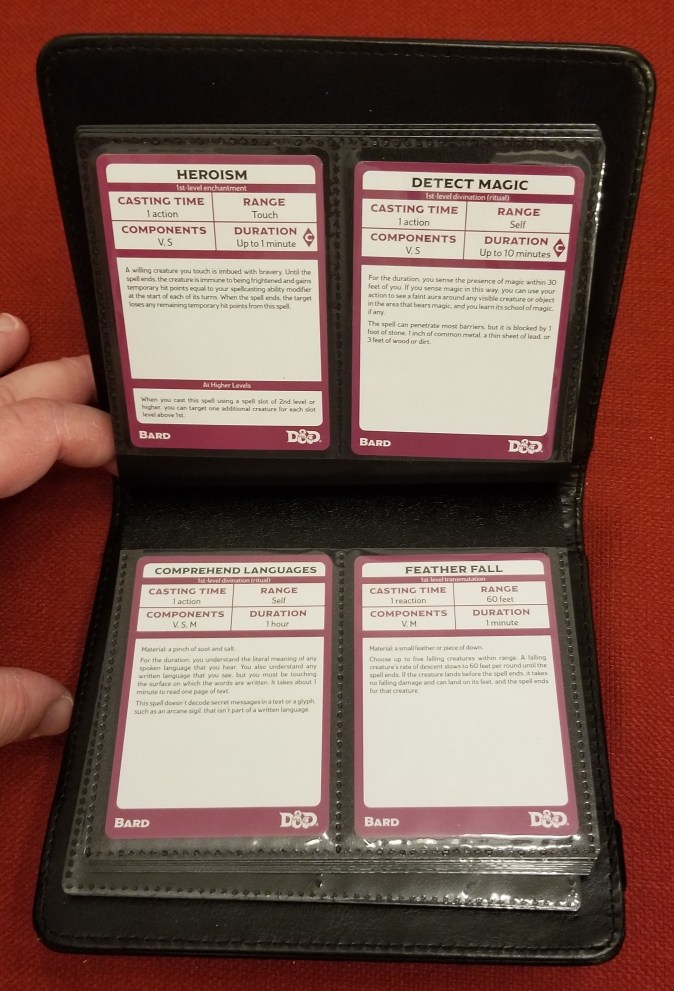
I also have a small card folio that I use whenever I need to compile a spellbook for a character from my spell cards.

spellcard folio.jpg spellcard folio inside.jpg

And, there you have it.  My massive DMing bag of holding set up for Adventurers League nights.  There is more I will probably throw in here if I run homebrew games, but this is going to be it’s usual configuration.

Starting Gear: Items for New 5E D&D Players

Some new players may find the amount of stuff that some people bring to D&D games intimidating, because we make it look like you “need” a lot of things to play, and a lot of these items can be expensive.

However, you don’t really “need” a lot.  In fact, for your first session, many players at the game table will have spares of the essentials, so they might be able to help you out the first game or two, but if you stick with the hobby there are a few things you should get at some point.

For your first session, if you are just trying out the game, I recommend printing out a couple of blank character sheets, bring a mechanical pencil with a good eraser, and bring something to write on.  Someone will usually have spare dice they can loan you for the night, some generic mini for on the battlemat, and you can usually find someone who will loan you their player’s handbook for the night and help you create your first character.

Character Sheets

If it’s an adventure league game, like what is often run at game stores, you will also need some log sheets.  You can make a free account at DMsguild.com to get access to the documentation and additional rules for Adventurers League.

Adventurers League Player & DM Pack

If you continue with the hobby, though, I recommend putting together the following kit as “Starting Gear.”

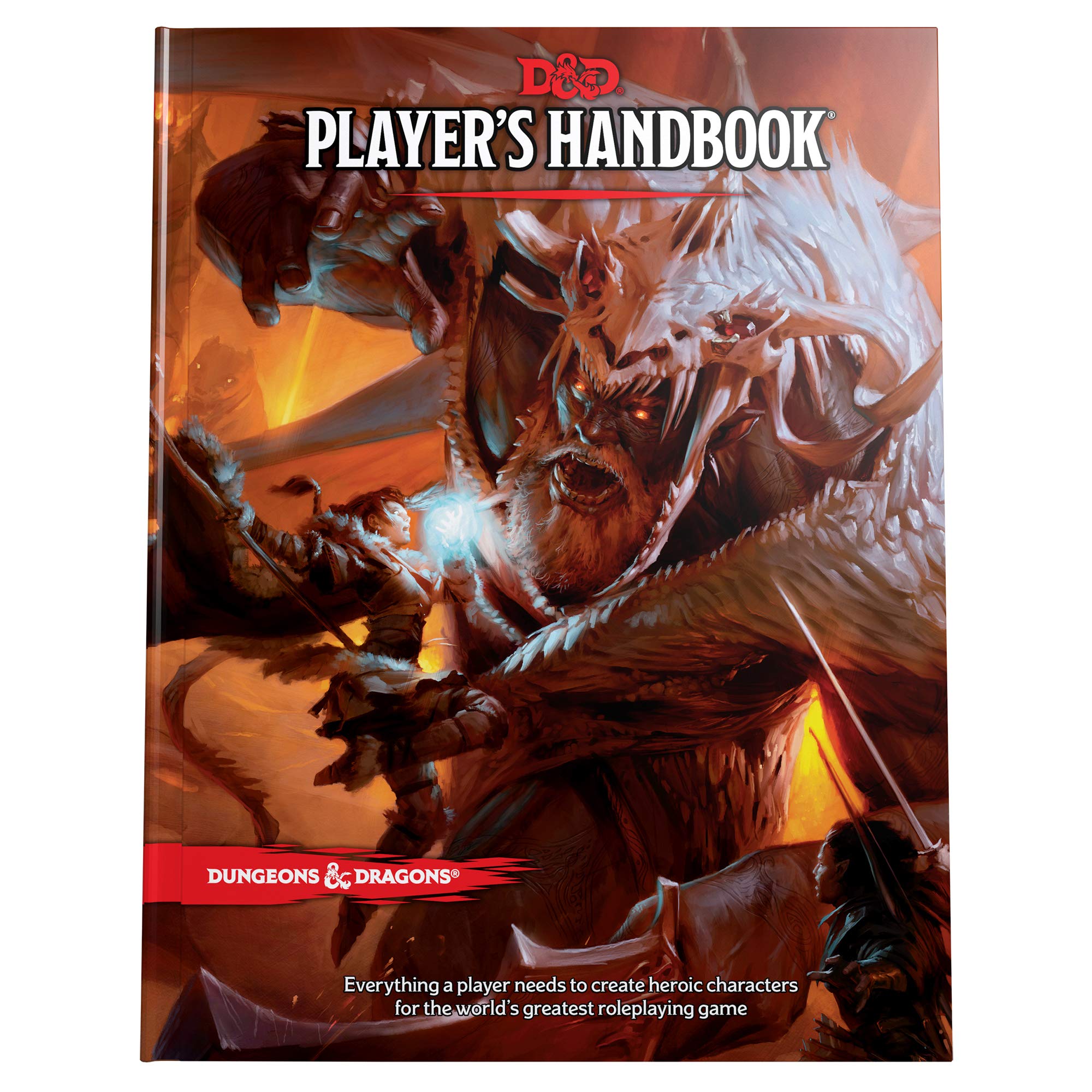
  1. Player’s Handbook (often shortened as PHB).  This contains all the essential rules that a player will generally need to make characters and play the game.  There are many other books out there, but you only really need this one, the others are optional for players.
    • Note: for the short term you can get away with using the basic rules document, but it is missing a lot of the information and options available in the full book.  You can find the document here. 5th Edition D&D Basic Rules
    • Here’s the rulebook you’ll want to get.  If it doesn’t have this cover, you’re probably getting the rulebook for a different edition, and the rules are NOT cross-compatible.Image result for player's handbook
  2. Pocket folder.  There will be a lot of papers (character sheets, logsheets, handouts) and you’ll need a way to carry them.  You might want to mark the folder clearly so that it doesn’t get mixed up with someone else’s.
  3. Tabletop RPG dice set.  Dice are denoted with a d followed by the number of sides of dice (example:  a d6 is a standard 6-sided die).   The exception is that d% indicates that you roll two ten-sided dice, with the one of them labeled for the tens digit, and you use them to get a number between 1 and 100.  A complete set includes a d4, d6, d8, d10, d% (the tens digit die), d12, and a d20.  You can find these easily at your friendly local game store (FLGS for short) or online.  There are dice sets available cheaply on Amazon, just search for “rpg dice.”
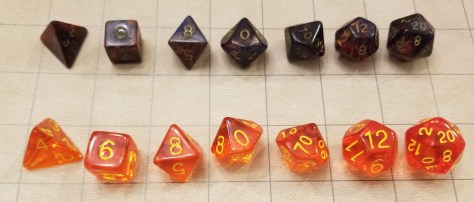
    • Some people (myself included) like to get fancy sets of dice, but I highly recommend starting out by getting a simple set of dice that are highly readable from a distance, like the bottom set.  More often you find sets that look like the top set, which look nicer, but the tradeoff is that they can be harder to read.dice sets.jpg
  4. An extra d20.  Fifth edition Dungeons and Dragons often uses mechanics called advantage and disadvantage.  If the dungeonmaster says you have advantage on an attack or other d20 roll, you roll two d20s, and take the higher result.  If they say you have disadvantage you roll two d20s and take the lower result.  In either case, it’s handier to have a second d20 rather than borrow one or rolling the same die consecutively.
  5. Your current character sheet (and corresponding log sheets, if it’s an Adventurers League game), in the folder.  If you lose your character sheet, you might be allowed to rebuild it, but that is up to the DM and playstyle of the table.  You might have to make an entirely new character, or borrow one, and nobody really wants to do that.
  6. Blank character sheets, log sheets, any printable references you use.  It’s always good to have backups, because you never know when you’ll need a new character.
  7. Mechanical pencils with good erasers.  Pencils seem to roam and disappear at tables, so I recommend spares.
  8. Something to represent your character on a 1-inch gaming grid.  You need either a miniature or token of some kind that clearly marks where you are on the battle map, and fits inside a 1-inch square when upright.  There are a lot of miniatures you can buy or 3D print (if you have access to that), but there are a lot of crafty solutions I’ve seen online and at the game store for cheap minis.  I’ve seen people print out images and fold them up to stand up with a coin, pictures in small stands, pictures glued to corks; there are many options that don’t break the bank.
  9. A bag to keep all of this together and be able to grab and go.  If you let your stuff mix in with other stuff at home, you might find that you don’t have everything you need at game night.
  10. A dice bag.  Just something to hold your dice together in the larger bag.  Doesn’t have to be anything fancy, and one usually comes with the dice that you buy.

That’s it!

Anything past that is optional for players, though I know many players (myself definitely included) who carry much more, but this is all you really need to get started.  Have fun!

NEW MODELS POSTED: 01/13/2019

I’ve been going through some of the files on my desktop, and decided to catch up a bit more on uploading them.

Bardic Inspiration Token

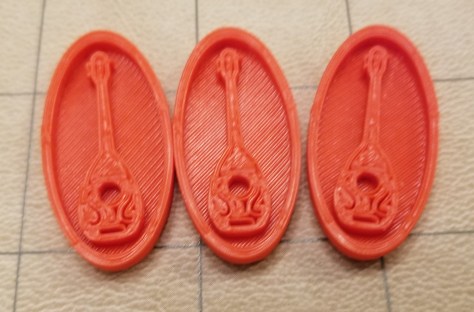
This is one of the 3D printed items that I’ve used the most at the gaming table.  It helps remind people when I’ve given them bardic inspiration, and reminds me of how many uses I have.

Bardic Inspiration Tokens.jpg

The below items I haven’t got printed examples of, as far as I know.  They are items I mixed into new items, but then decided not to actually use.

Bone Pile – Based

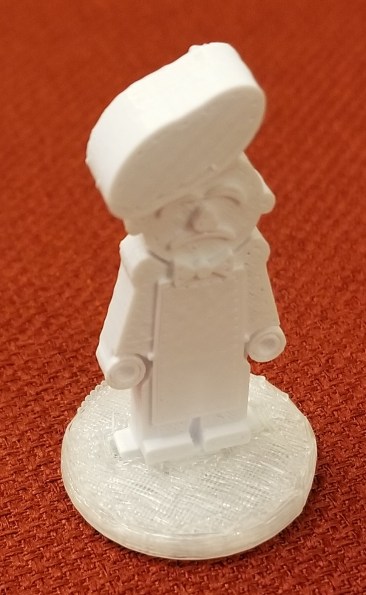
Meeple-Based Commoner Token


DM Tools: Flatminis and Case

I’ve probably been a bit confusing with some of my posts so far, referring to my collection of Flatminis without really explaining them, so here it is.

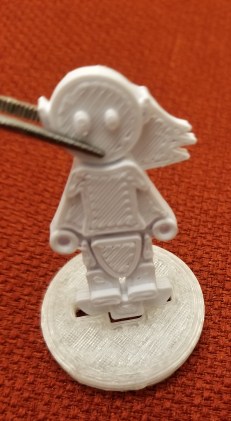
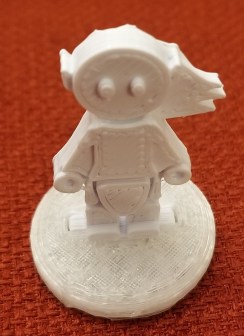
Flatminis are series of RPG minis available on Thingiverse for free to 3D print.  They are more of what I refer to as 2.5D minis, as they are designed to print flat on a 3D print bed, and it adds depth to them in layers, not requiring any sort of support (though I do highly recommend printing them using rafting, or you’ll have a hard time getting them off the plate).  You print the mini that has a standardized connector tab, and you print a matching base system to go with them that you insert the tab into like so:

1.

flatminis 1

2.

flatminis 2.jpg

3.

flatminis 3.jpg

The base design is standardized, so if you have your printer calibrated well you can print a number of the bases, and then print an even larger number of minis because you likely aren’t going to need all the minis at the same time.

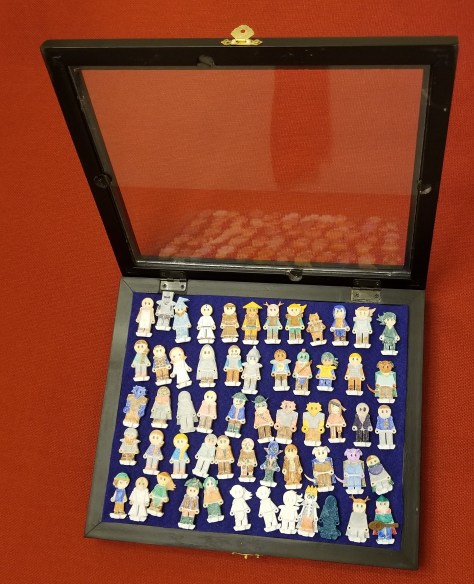
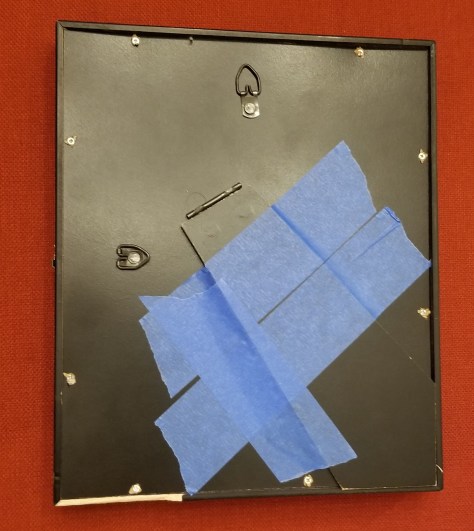
Also, by storing the mini and base separately, you can store them much more compactly.  I keep a lot of the bases in my toolbox, and the player character/npc minis in a separate case for ease of storage and access.  The case is a little display case that I found at a hobby store and added some layers of felt to thicken up the padding and make it look better.  I also had to tape back the display stand portion of it so it wouldn’t flap in the way.

flatminis case closed.jpg

flatminis case open.jpgflatminis case back.jpg

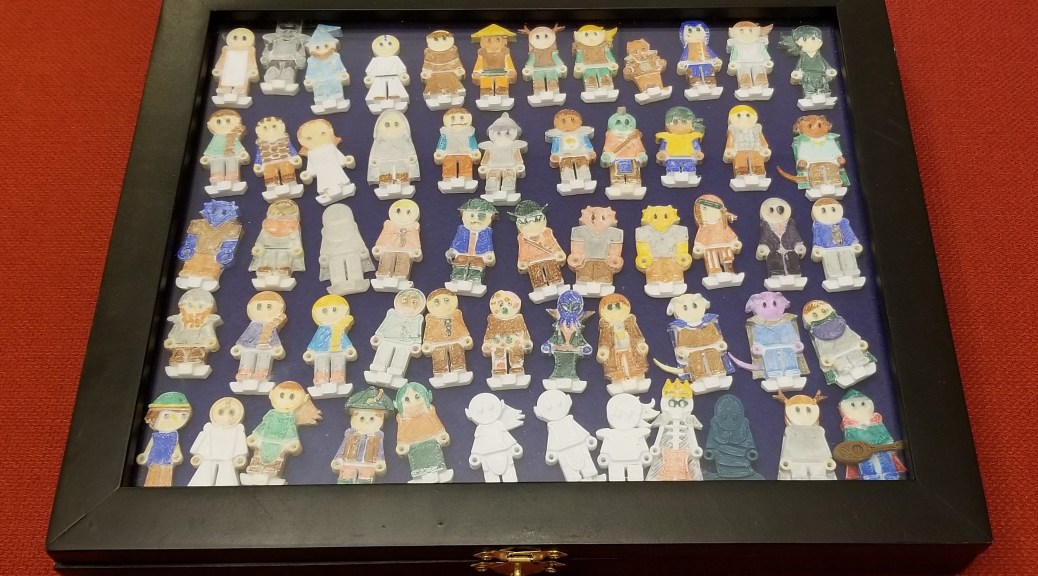
Personally, I sometimes refer to these as Crayola Characters.  Why?  Because I like 3D printing, but not so much doing the detailed painting others do with minis, I literally use crayola markers to color in the white plastic characters, and then clearcoat the outside with nail polish topcoat 24 hours later to seal in the ink and prevent smearing/wearing off on other items (or my hands) in use or storage.

flatminis-colored-in.jpg

Sure, these minis can be simplistic and goofy looking, but I like them.  It allows me to safely and easily carry a wide variety of minis for when someone (particularly newer players or players with new characters) doesn’t have a mini, or when we need some random NPCs in a game.

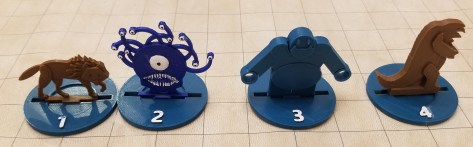
Also, my enemy minis are mostly Flatminis as well, allowing me to keep an assortment of common enemies on hand without having to carry a bulky foam case with a lot of fragile minis.  I have at least 8 of each of the following minis.

flatminis enemies.jpg

Thingiverse has a pretty good variety of them, which I and some others add to every so often as we create things for our own needs.  I tend to remix in the connector pieces from existing Flatminis, and use a combination of Paint and Microsoft 3D Builder to turn 2D images into minis designs like I did with the heads of the orcs.

flatminis orc.jpg

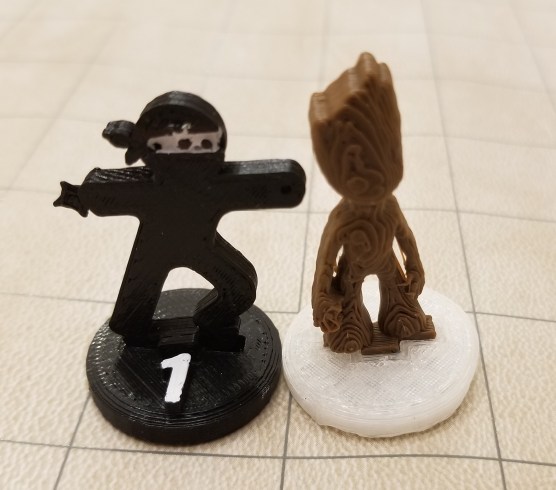
Sometimes I also find keychains or other mostly flat designs on Thingiverse and remix them into Flatminis, like I did with my ninja minis and making twig blights out of a model of baby Groot.

flatminis ninja and groot.jpg

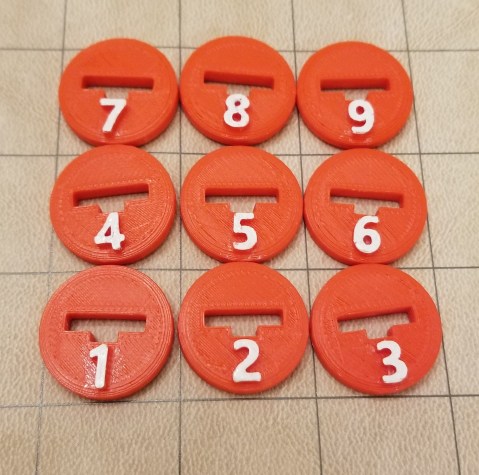
For DM accounting purposes I made some modified bases with numbers on them,

numbered flatminis bases.jpg

There are also some large size Flatminis.

large flatminis.jpg

It’s really convenient storage and portability-wise to use Flatminis, and enables me to always have a good amount of mini variety at the table.  It’s also kinda awesome when we have new players at the table who don’t have minis.  There’s almost always something close enough for someone to use.

Note:  There are weapon sets made to fit Flatminis, but I don’t make these due to some issues with the 3D printing process of such small and thin objects.

Loot Drop: Ultimate Boardgame Backpack, Part 1

I’ve been meaning to do this one for a couple weeks now… but I was kinda busy with the holidays.  So, here’s my review of the Geek On Ultimate Boardgame Backpack (or as I call it the Backpack of Gaming).  Before I get too deep in, here’s the link for those who just want to find where to get one:

Geek On

I play a weekly D&D game (Adventure League style at my friendly local game store), and I’m always carrying a lot of stuff for the games.  At minimum, I carry: Player’s Handbook, Xanathar’s Guide to Everything, multiple folders (full of characters, handouts, spare sheets of many varieties), dice, pencils, erasers, a case full of 3d printed Flatminis, and my DM’s Toolbox of Holding.  If I’m DMing, I also carry: DM screen, the hardcover I’m running, wet erase markers, paper towels, bottle of water, Dungeon Master’s Guide, Monster Manual, game mat, premade maps… the list goes on.

Hopefully before I scare any new players away, you don’t need to carry that much stuff, especially if you are just starting out.  I’ll cover what I recommend in another post, but keep in mind that for this post, I carry an absurd amount of stuff because I want to and can.

Also, my friends and I occasionally have game days, and when they aren’t at my place, I need to be able to carry multiple board games.  This is a massive pain.  They are bulky and unwieldy to carry, especially in anything other than nice weather.

Anyway, as you can see I need a lot of storage capacity.  I’ve been using a Fallout 4 messenger bag for carrying most of the loose items, and carrying the tool box in one hand when playing.  Then I have to add a map tube and another bag for additional materials if I am DMing.  Enter the Ultimate Boardgame Backpack.

This came across my Kickstarter radar a while back, and I immediately wanted one.

I’ve mentioned it before here:

Boardgame Backpack Kickstarter

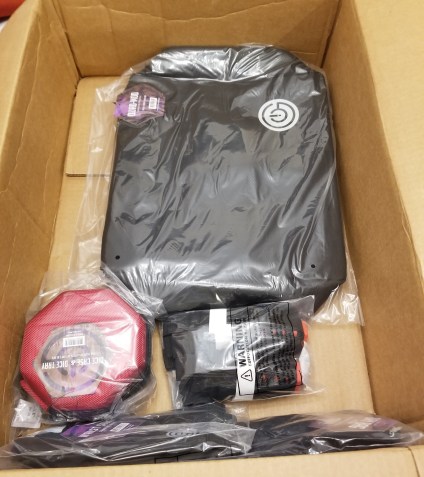
Well, now it’s arrived, just before the holidays.  Here it is in the box:
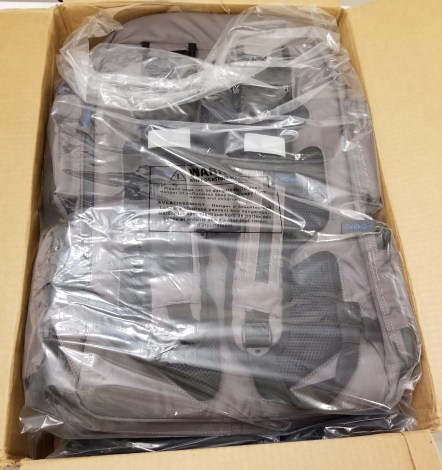
Backpack in Box.jpgAccessories in Box.jpg

So far so good.  Everything is individually plastic wrapped and tagged as a professional product.  The backpack comes folded up, and then you have to unfold it into the final shape.  Here it is folded:

Folded Backpack.jpg

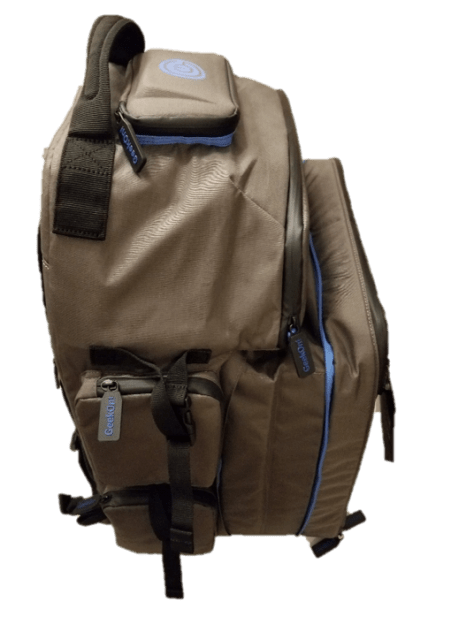
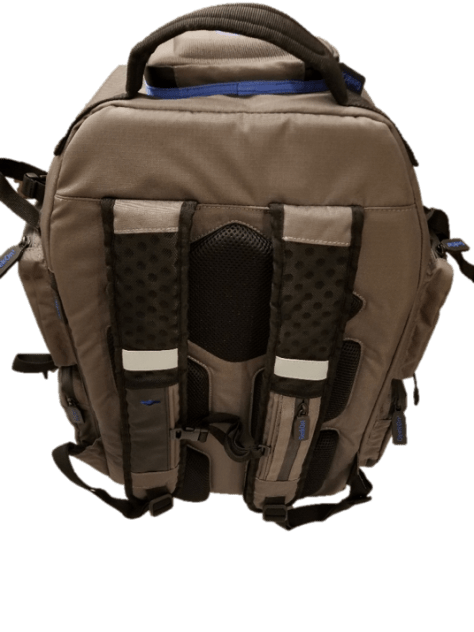
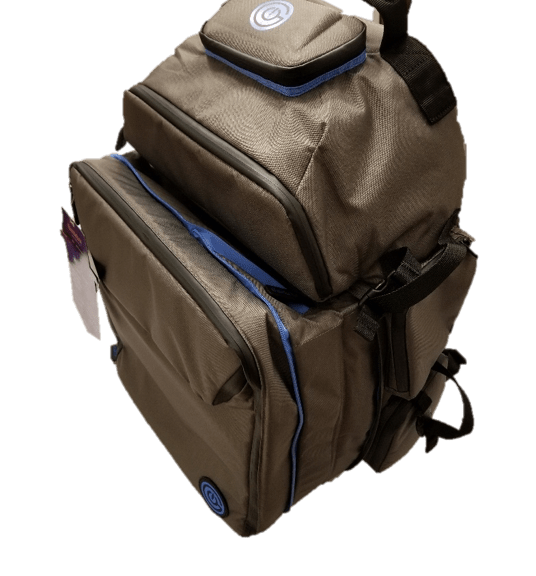
And here it is assembled and fully expanded.

AssembledFront.pngAssembled Side.png


AssembledBack.pngIsometric View.png

This thing is huge, and packed with useful features.  Each side has two pockets, with the bottom ones having built in koozies.  You can also use the bottom pocket and the side straps to mount a map drybag (which I also got).  The back and straps are heavily padded, and there is an optional belt to help with the weight.

The main compartment has an enormous carrying capacity, depending on whether you have it full expanded.  For storage it is collapsible, but expanded, it has fold out reinforcing foam panels and a drawbridge-style support for your heavy games.  This allows you to carry both bulk and weight.  It was deliberately sized to carry a lot of common boxed games.  As you can see here, if you have much weight up top the compartment will sag the large compartment a bit, but if you fill it up with games it becomes a non-issue.
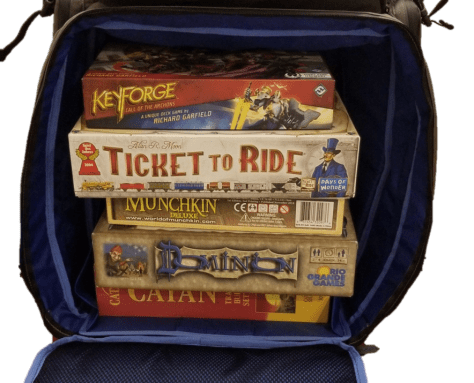
Games_Inside.png

And now, for my favorite part… the DMing configuration:

DMing.png

I’m able to fit ALL my 5e rulebooks, plus a couple of books for running games (yes, I know the Mini-Dungeon Tome, from another kickstarter, is not AL-legal), the toolbox, the DM screen, and the case of Flatminis (not shown here) in the main compartment.  The dice case/tray fit in the top compartment, the spellcard boxes fit in the side compartments, the folders fit in the fold-down door of the compartment, the map fits on the side, and there is still some space for some items in the top compartment.  I will note with that many books, it is HEAVY, and a few of these books I won’t normally carry because they aren’t referenced at the table much.  I’ll get some better pictures on my semi-finalized configurations for the next installment, showing where I’ve placed everything.  I’ll also go over the add-on/accessory items that came with it.

Update: 12/31/2018

I’ve added two pages, listing the VR games/programs that are listed in my Oculus and Steam libraries.  They are accessible via the VR Gaming page, and links here:

Full List of Oculus Store Titles

Full List of Steam Store Titles


Feel free to ask me for more information/reviews on these titles.  I may have to reinstall them to refresh my memory or retry them, but I might be able to give you more information before you decide whether to buy them.

R-N-W

I don’t really know much about this vendor yet, but I just stumbled across them and wanted to note where they were at.  They seem to have some excellent printable references, some of it being illustrated item cards, some of it being papercraft stuff that I’d want to do for a home-based game.  Might need to stock up on some cardstock to make it more durable.

R-N-W

Status Update 12/1/18

Okay, so it’s been a little while since I’ve updated this.  Here’s a bit of what has been going on:

My gaming rig began malfunctioning.  My 3d printer tried to catch fire and eat itself.  Also a holiday got it the way, with me having to rely on my unreliable tablet.

I’ve since been working to rectify this situation.

The gaming rig was unstable.  It would often not start up, take a long time starting up, or have issues in the reverse direction; it wouldn’t shut down at times.  I also kept seeing messages about memory being faulty and drives needing repair.  It turns out that I had at least two separate issues going on, though there may have been more that got caught up in the diagnostics, troubleshooting programs, virus scans, and updates that I used in the process of trying to fix things.

Issue 1: My RAM was going bad.

Issue 2: My secondary SSD was malfunctioning.

Now that I’ve replaced the RAM and removed the secondary SSD from the system, thr computer seems to be running fine.

For the printer, that involved replacing the print head assembly.  It was mostly straightforward.  The worst part of that was that I had to remove the old rewiring, and put the new wiring in.  The cables were wrapped to deal with wear and tear, so I had to unwrap them, pull out the wires, put the new ones in, rewrap, and zip tie them.  Not so much difficult as tedious and time consuming,

I’ve also gotten a new laptop so I won’t be without one on trips.  I may end up having to review it on here soon.

Halloween 2018: Ghostbusters Uniform

Ghostbusters have always been a favorite franchise of mine.  I grew up watching the Real Ghostbusters and Extreme Ghostbusters as a kid, and when I was older I loved the movies.  I find it fitting that this go up here, as they are true Technomancers themselves.  They are even referred to as modern wizards by magic users in the extended lore.  If I recall correctly, Egon is even descended from a wizard!

Anyway, I mentioned this before, but I finally built a better Ghostbusters uniform than I had in the past.  I wasn’t quite able to get the jumpsuit like I wanted in time (not too surprising, given my size), so I found a way to make it work.  I’m pretty proud about the result.  I was getting compliments all day.  I guess that’s part of why a lot of people cosplay.  Between Spirit Halloween and GBfans.org, it was easier than ever to put together a reasonable costume.

Here’s what it looked like:

Ghostbuster_Background_Removed.png

Ghostbuster_Background_Removed2.png

Ghostbuster_Background_Removed3.png


I think it turned out pretty well, but I think I’m going to be continuing to improve on it in the future.  I’ve already seen some references and gotten some ideas in mind for upgrades.  I think I’ll try them out on the older Spirit Halloween proton pack at some point.